The past couple of days were devoted to one of the more tedious chores of the garden: eradicating invasive vines. Yesterday, I spent the afternoon suited up head to toe in protective clothing, digging out poison ivy. I made a bit of headway, pulling two green garbage bags of the stuff out, and confirming in the process that yes, my poison ivy too, has three different shapes of leaves on one vine. Yay.
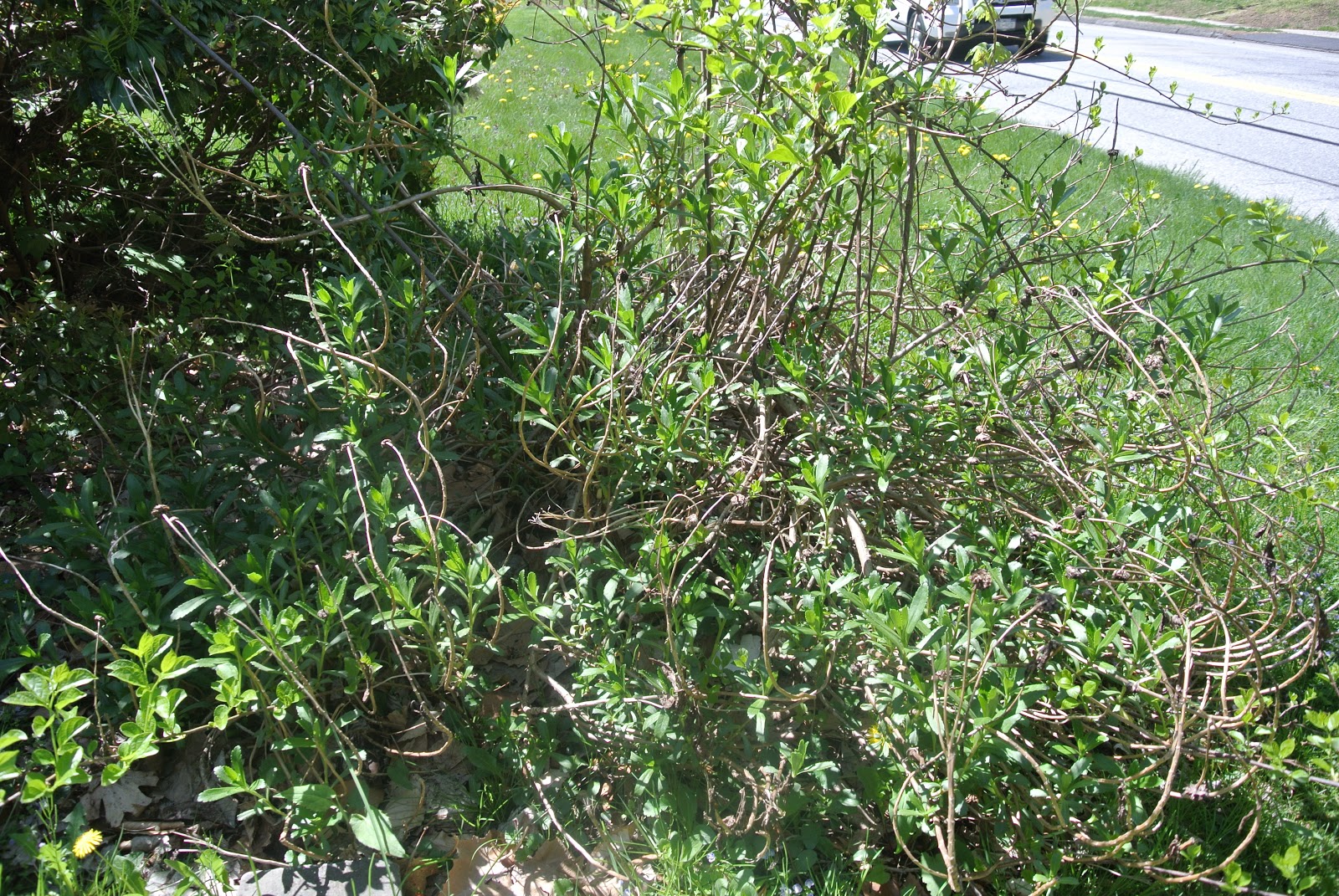
Today's task was slightly easier and much more interesting -- free the hardy cape daisy (where? you might ask yourself):
It took me two full years to "see" this plant. The first summer, I had no idea what it was. Then, late in the summer, I looked out the window one day and saw a daisy. Daisy? I thought. There aren't any daisies there. I thought I was seeing things, truly. Did I go investigate? I can't even remember. There was a lot going on (we were painting the back of the house).
Then in the spring, last spring, I scrutinized the thing closely. Nothing. Shrug. It was half non-descript strange looking weedy bush, half non-descript looking tree like thing. I wasn't sure what to make of it, so left it alone. Then, late in the summer, there were those white flowers again. This time I looked (but didn't take any photos). They had a blue center. Pretty! I thought. And it must be perennial, if it came back again. But I couldn't figure out what part of the plant was blooming. All I could find was a bush. A daisy bush? I wondered. I'd never heard of such a thing.
Time passed, vines started shooting out everywhere. Then in the fall, there were orange berries. Bittersweet, Capel announced. I looked it up. Invasive. The web announced. Lovely, I thought.
Then I googled "white blue-eyed daisy bush." Nothing except a photo of a purple flower. This was before I realized that googling images is a much faster road to identification. I kept trying different word combinations. Then bingo! African daisy. Except noone said "bush" or "shrub" or even "perennial." Half-hardy, they all say. But I've got a bush. Or, half a bush.
Fast forward to this spring. The two-headed bush is bare limbed (or that's how I remember it). Yes, here it is in April, to the left of the andromeda. I've researched bittersweet again, too, puzzling about which to save. I like the look of bittersweet. For awhile I wonder if I can keep both.
In May, the two sides are starting to show their different leaves. Cool, I think, still pondering. Finally, the outlines of the daisy are beginning to take shape, in contradistinction to the bittersweet. I "see" the bush.
Then I'm working all over the yard, letting it do its thing. Then it rains for a week. Then it rains for another week. Yesterday, we finally get some sun, and I go out and shazaam. The bush has disappeared. It's been devoured alive.
Finally, my path is clear. The bittersweet has got to go. Pronto.
I fully intended to start here yesterday. But Capel wanted to mow the lawn and predictably, the poison ivy has already escaped out from under the landscape fabric on the north border and grown long, invisible tentacles out into the lawn, flagged only by the tiny, shiny red advance leaves. Poison ivy avant garde. You can't mow that, I announce. I promptly suit up and start removing poison ivy. Hours later, the sun is setting.
Today, then, finally, I get to the daisy. Which I've never taken a photograph of. But here is someone else's photo. When it's free, and when it blooms, it will look like this. Someday.
In the meanwhile, I remove this:
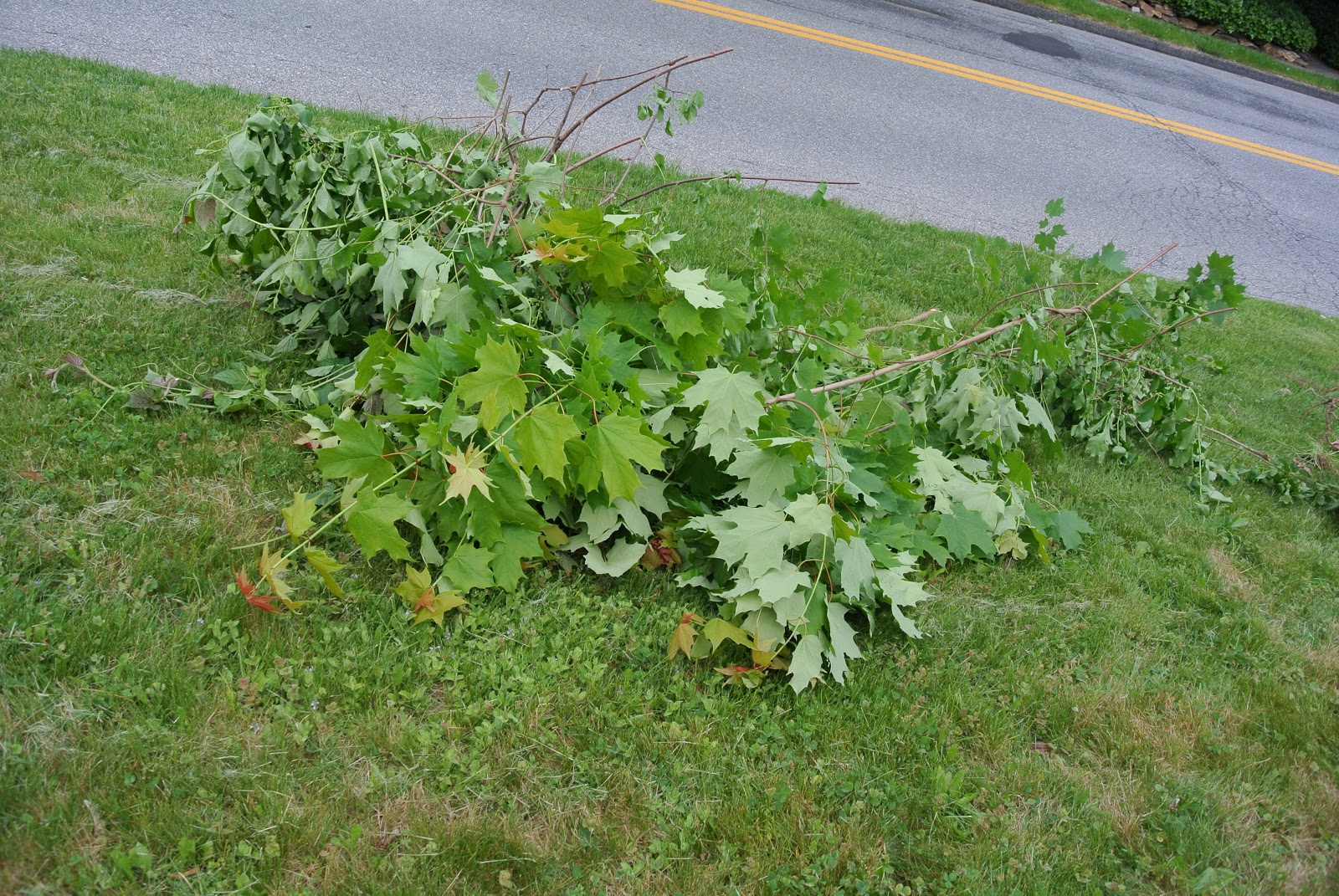
And this.
Two maple saplings and a huge head of bittersweet ... tentacles of bittersweet vine spreading up and over into the andromeda, and roots spread under the andromeda ...
and from the andromeda to the pink azalea ...
... and on to the white azalea. I pull these long skinny brown vines and great mats of soil roll back and the red roots pull up like carpets. I go as far as I can, three bushes over ...
I get it all, I think. Plus the maple sapling in the andromeda. It's starting to look like a shrubbery!
Then I go back to the daisy, bittersweet home base.

At home base, I can't get any root. The stem of the bittersweet is as thick as my thumb and nestled right up to the main stem of the cape daisy. Their roots are clearly grown together. I cut the bittersweet at the base, knowing it will come back hydra-headed. But after some work and a lot of head-shaking to make sure I don't have bugs in my hair from ducking my head underneath leaves and branches, I do, finally, get it all.
The daisy looks a little sparse. It will fill in, I think. Before the bittersweet overtakes it again, I hope.
But it is a bush, truly. And it must be ancient. There is a very old, woody stem and new shoots in more than one place, from the stem and also straight up from the ground.
It looks okay.
Better than before, at least.
If a bit smaller.
And ... a bonus extricated from amongst the roots and leaves, two straggling lilies of the valley to be coddled into bloom.
It starts to spit rain. I pack up two lawn bags of leaves and roots, and tug the maple saplings around to the curb. Transplant a couple of alyssum in the other garden, dodging rain drops. The rain will be good for them all, and I? The rain is good for me too, happy with a job well done.